By clicking “Accept All Cookies”, you agree to the storing of cookies on your device to enhance site navigation, analyze site usage, and assist in our marketing efforts. View our Privacy Policy for more information.
The Power of Hand-Portioning and Slow Eating: Simple Habits That Transform Your Nutrition
hand portion and slow eating
By
February 8, 2026
Related

The Power of Hand-Portioning and Slow Eating: Simple Habits That Transform Your Nutrition
When people think about improving their nutrition, they often jump straight to strict diets, calorie counting, or complicated meal plans. While those tools can work, they’re not always realistic or sustainable for busy lives. Two simple strategies—hand-portioning and slow eating—can dramatically improve how much you eat, how well you digest your food, and how satisfied you feel after meals. Best of all, they require no apps, scales, or complicated rules.
Why Portion Awareness Matters
One of the biggest challenges in nutrition is eating the right amount. Portions served in restaurants and even at home have steadily increased over time, making it easy to overeat without realizing it. Hand-portioning provides a practical, visual way to build balanced meals without measuring everything.
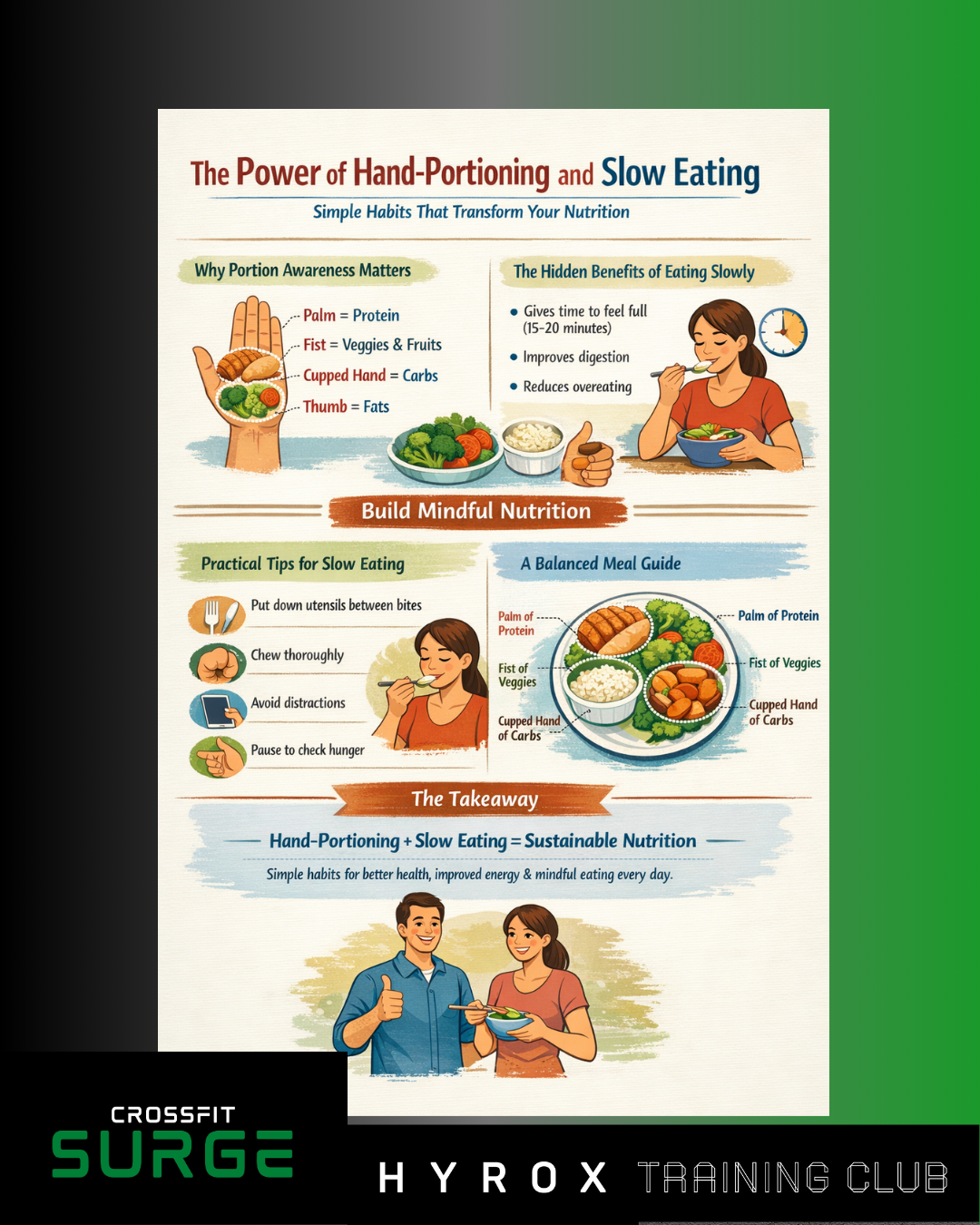
Your hand is always with you, and it naturally scales to your body size. A simple guideline many coaches use includes:
- Palm = protein (chicken, fish, eggs, tofu, lean beef)
- Fist = vegetables or fruits
- Cupped hand = carbohydrates (rice, potatoes, fruit, pasta, grains)
- Thumb = healthy fats (oils, nuts, seeds, nut butter)
This approach helps you create meals that include protein for muscle repair, carbohydrates for energy, fats for hormone health, and plenty of produce for micronutrients and fiber. Over time, consistent portion awareness can help stabilize energy levels, support performance, and prevent the common cycle of overeating followed by restrictive dieting.
The Hidden Benefits of Eating Slowly
Even with well-balanced meals, how you eat is just as important as what you eat. Slow eating gives your body time to recognize fullness signals. It takes roughly 15–20 minutes for your brain to register that you’re satisfied. When meals are rushed, it’s easy to consume far more food than your body actually needs.
Eating slowly also improves digestion. Chewing thoroughly begins the digestive process and reduces stress on your stomach and intestines. Many people notice less bloating, fewer digestive complaints, and more consistent energy when they slow down and pay attention to their meals.
Some simple ways to practice slow eating include:
- Putting utensils down between bites
- Taking a breath before starting your meal
- Chewing each bite thoroughly
- Avoiding constant phone use or distractions while eating
- Checking in halfway through your meal to assess hunger levels
Building Awareness Without Restriction
Hand-portioning and slow eating work especially well together because they encourage mindful nutrition rather than strict rules. Instead of obsessing over numbers or eliminating foods, you learn to recognize hunger cues, satisfaction, and portion balance.
This approach supports long-term consistency. You can apply it at home, at restaurants, while traveling, or during busy workdays. It’s flexible enough for athletes seeking performance gains, individuals aiming for weight management, and anyone simply trying to build healthier eating habits.
A Practical Starting Point
Begin by building each meal around a palm-sized protein source, adding a fist of vegetables, a cupped hand of carbohydrates (adjusting based on activity level), and a thumb-sized portion of healthy fats. Once your plate is set, slow down—aim for at least 15 minutes to finish your meal. Pay attention to how your body feels before, during, and after eating.
Over time, you’ll likely notice improved satiety, fewer energy crashes, and a better understanding of your personal nutrition needs. Small, consistent habits often produce the most meaningful long-term changes.
The Takeaway
Nutrition doesn’t have to be complicated to be effective. Hand-portioning provides a simple structure for balanced meals, while slow eating helps your body regulate intake naturally. Together, they create a sustainable foundation for improved health, better performance, and a more positive relationship with food. Start small, stay consistent, and let these habits guide you toward smarter, more mindful eating every day.



.png)
